G’day, I thought some readers might be interested to hear what I’ve been up to in the recording studio recently.
This month I was asked to record with vocalist John Duval (who I recorded with last year) as he re-visits the song “You Are What Love Means To me”, best known as the theme song from the movie “Tender Mercies”. It’s a song firmly in the country ballad style, although John wanted his version to have a more contemporary/commercial approach.
We set up in the smallish drum booth at Salt Studios in Balaclava. Owner/engineer Alex is a helpful chap (even helped me load in with my drums!), who I always look forward to working with. Being a muso himself, he generally anticipates what is needed (for example my headphone mix, emphasising guide vocal, bass and piano, no drums), so the session really flows smoothly.
https://music.youtube.com/playlist?list=OLAK5uy_kfk-CkETjOUqZ7w7IYJDid5wo_dqmOKhQ
Bass Guitar: Terry Lewis Lead Guitar: Ben Dewhirst Rhythm Acoustic Guitar: John Cataldo. Keyboards: Joe Ruberto (Electric piano and Strings)
Sound Engineer: Alex Quayle
Kit – DW Collectors Maple/Mahogany – 8×12 tom tom, 14×14 floor tom, 14×18 kick drum with factory fitted Audix D6 internal mic (Alex used this as well as an external mic), 5×14 (wood) snare drum (mic on top only)
ZILDJIAN 14” New Beat Hi Hats, ZILDJIAN 20” K Constantinople Bounce Ride, ZILDJIAN 16″ K Sweet Crash
View of DW setup (onstage)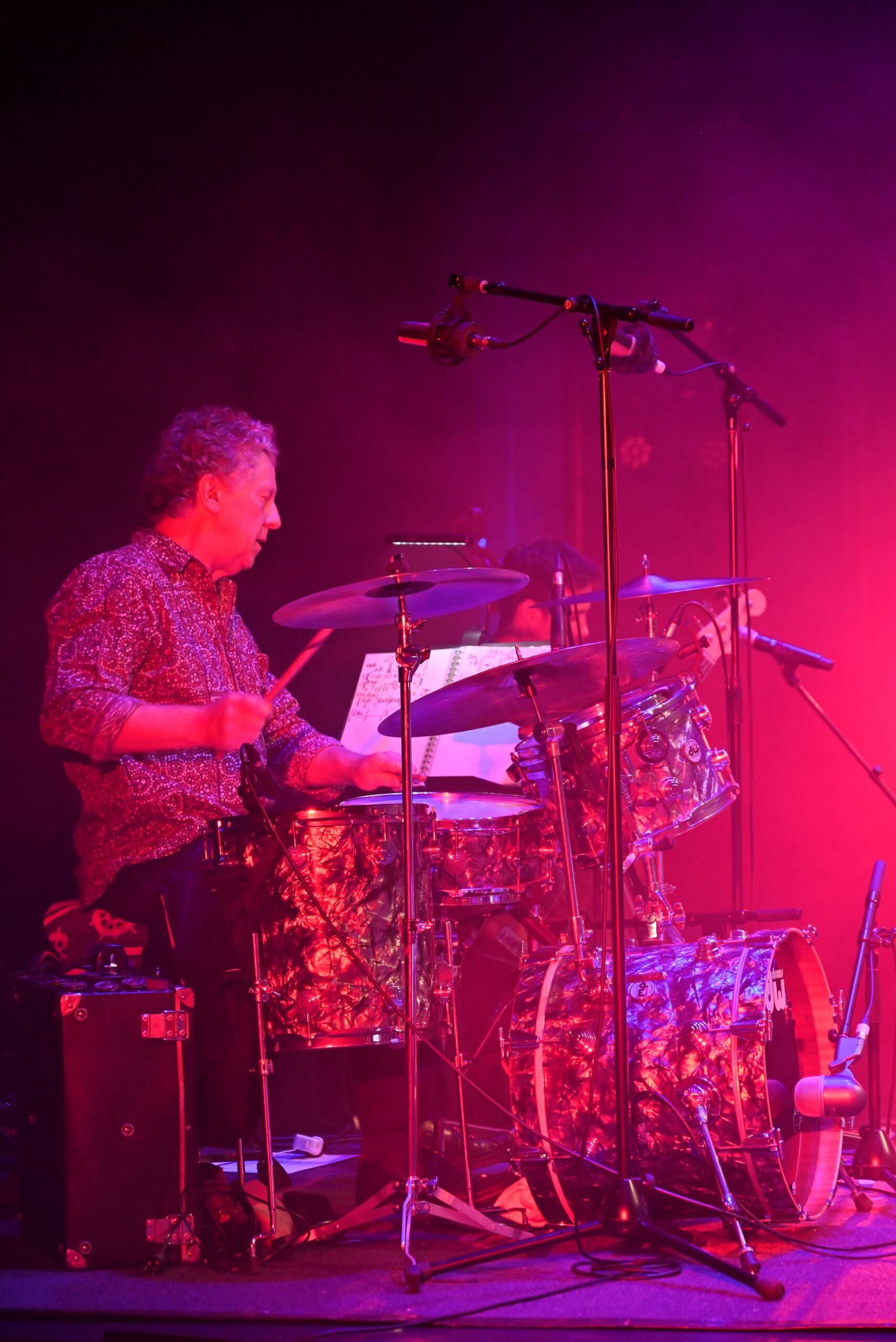
Having completed my setup, which always comes up sounding great, Alex recorded a bit of my playing and we listened back to see if any tweaks were required. We decided the snare was a little too high-pitched for this style, so I lowered the head tension to a point just above ‘wrinkle’ tension. Just right. I used a little Moongel on each drum to focus the tone and remove a little of the ring.
We talked through some specific arrangement things John wanted, such as –
* A hi hat opening phrase beginning early in the song (to establish momentum and encourage listeners with a short attention span to keep listening beyond the intro)
* Dynamic changes
*When to switch from rim click to snare
*Some important accents to emphasise along with the band
It’s a pleasure to work with singers who know what they want arrangement-wise.
We were recording the song with all musicians playing, aiming for a band vibe even though technically we are session guys. We all had a guide click in our headphones for the first verse, removed for the rest of the song. Although the intention was to help keep the instruments playing the intro and first verse tight, I found this useful for helping me feel the tempo and relax in the knowledge we were spot on for the first minute or so.
Although busy singing a guide vocal, John was able to monitor our playing as we ran down the takes, giving advice about sounds and arrangement as we went along. I really like having the vocalist do this, I’m sure I perform better than if I just imagine the vocal. After about eight takes he felt like we had the best version. I was mostly happy with my contributions on all the takes, so it didn’t matter to me which one he chose as his master.
Here’s the feedback email John sent me a day or two after the session- “Great drum work. Loved the solid, steady control and feel, which really comes to the forefront during the lead solo. Very commercial and professional”. So, job done – happy client!
I think it’s important in the studio to be consistent from take to take, with placement of strokes as well as volume. This makes everything easier to pull together in the mixing stage. But it’s also important to keep the appropriate vibe happening, avoiding becoming stale or wooden after playing the same song many times. So, some mental or attitudinal adjustment goes a long way at times. Not to mention pacing yourself, if you are recording lots of songs.
A small note here about the rim clicks which you can hear sitting in just the right place in the mix. I ALWAYS reverse my left stick when playing rim clicks; I’ve seen too many drummers not doing this, and as a result the audience can’t hear any of the clicks because the click sound has no resonance. I even saw a professional drummer playing live last week making this rookie error, very disappointing.
Rant over, hope you enjoyed this peek inside a Melbourne recording studio! Keep practising and learning, and most of all, listening…..