In this blog, I’m hoping to answer the most common questions drummers have about recording.
1. Should I approach studio drumming differently to live drumming?
Yes— definitely. Studio drumming generally puts the emphasis on feel, precision, and restraint more than maximum power or flash.
Salient points include
- Dynamics are key. You’re not projecting to the back of a venue— microphones are very close to the drums. It could even be observed that some drummers choke the tone of their drums by hitting unnecessarily hard in the studio.
- Hi hats and cymbals may not need to be struck as hard as live performances. If they are, the engineer may find it impossible to keep that treble wash under control, leading to a messy mix.
- Consistency matters. Unless the song calls for variation, every hit should be consistent tone and volume.
- My real-world example here is “You Don’t Feel A Thing”. I used my Pearl Steve Ferrone nickel-coated brass shell snare for this, and at 3:37 moved the sticks back towards my body to create rimshots with a timbale-like sound. https://www.youtube.com/watch?v=qg6XvyNFJPk&list=OLAK5uy_k1j4ScjeaHGDZN1yGOi4tJAaTxn8-YVHw&index=13

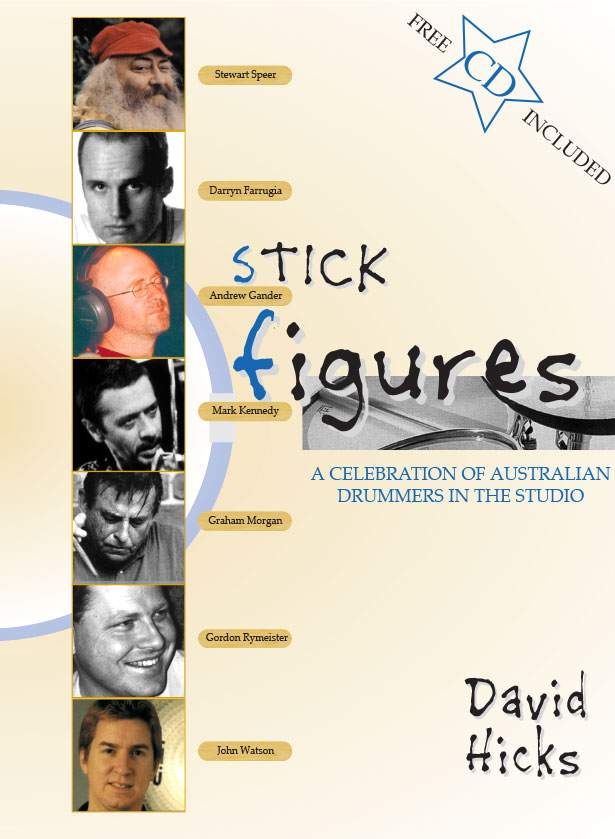
More groove, less fills. Simpler is often better when it serves the song. You really only have to listen to any modern master drummer to realise this. Someone such as John Robinson imbues their simple groove with such feel that it doesn’t matter if there are no (or minimal) fills. Note that he makes every single note count, and has an awareness of the space around each note. Examples of this simplicity from my book Stick Figures include “Mean It” (Andrew Gander), “House Of Cards” (John Watson), “Western Union Man” (Stewie Speer), “Don’t Judge Me” (Gordon Rytmeister), and “Mudskipper” (Darryn Farrugia).
2. What’s the best way to prepare before a session?
- Know the songs (if possible) inside and out. If charts or demos are provided, study them. If not, make your own ‘cheat sheets’. I would also suggest knowing the lyric content, both as an arrangement guide, and to understand the emotion of the song.
- Tune your drums ahead of time. There are plenty of Youtube videos to help you; but there’s no substitute for experience and experimentation. Don’t assume an engineer can, as the saying goes, ‘make a silk purse out of a sow’s ear’.
- Bring some spares (sticks, felts, snare, pedals, etc.).
- Bring whatever you need in the way of sustenance including water, towels, nuts etc.
- Warm up physically and mentally. Studio work can be intense and require total focus. Consider that it’s likely your part will be the first to be kept, as other musicians might go back and fix mistakes, but you may not have that luxury.
- If possible, bring some more optional snare drums or cymbal choices— some tonal variety may enhance the songs, making each one more unique. Obviously the easiest way to vary is changing the tuning and/or damping from one track to another.
- My real-world example here is from a pop session by Melbourne band The Kevins, where the engineer couldn’t pull a satisfactory sound with my Slingerland 16” floor tom. He suggested taking the bottom head off, and it worked well, with a bit of reverb added. The toms are particularly prominent at 3:08 –
3. What if I am required to play to a click track?
The click track (metronome) can be your best friend—or your worst enemy if you’re not used to it. Whilst it is less common to use one these days, it’s a skill which should be in every drummer’s tool kit.
Tips:
- Practice at home with a click—start with basic, simple, grooves, then later add complexity (fills, ghost notes, etc.).
- Learn to “feel” the click instead of chasing it; I like to imagine it’s a percussion player I’m locking in with. This is easier if a percussion sample is used instead of just a beep.
- Sometimes it’s okay to push or pull slightly for feel—but make sure it’s intentional. Typically, a chorus can sound more exciting if it’s a fraction faster.
- Ask if there’s a “groove click”, a loop, or if some subdivisions like 16ths are available for more nuance.
4. Communicating with producers and engineers
Drummers often wonder:“What if they want something different than what I’m playing?”
- Stay humble and flexible. The producer’s job is to get the best out of everyone. Being open to an alternative idea might push you into exciting uncharted territory – your musicianship will benefit!
- Learn to speak studio language: terms like pocket, feel, tighten up, laid-back, etc.
- If they say “give me something tighter” or “more open,” ask for clarification if needed.
- Be professional: Be confident without being egotistic, show up early, listen more than you talk.
5. How important are sound and gear choices?
In the studio, tone is critical. Likewise, the balance you create of the parts of your kit really matters.
Consider:
- Drum size and shell type (birch vs. maple, etc.)
- Heads (coated vs. clear, single vs. double ply)
- Dampening methods (moongel, zero rings, wallets, tape)
- Cymbal choice (bright vs. dark, washy vs. defined, thin vs thick)
- Stick choice affects attack and tone.
- Sometimes an engineer might even tune or dampen your kit for a specific sound. It’s not personal—it’s about what works best for the track.
- It should not be necessary to remind drummers that their gear must be in top working order, including lubricated moving parts and no metal-to-metal contact on cymbal stands.
6. What if I make mistakes?
No one expects perfection in every take—that’s partly what multiple takes are for.
However, try to
- Keep your energy and tempo consistent.
- Make sure transitions (fills, stops, builds) are clean.
- Don’t fall apart if you mess up. Just keep playing—editing software can often save a good performance. See my previous blog, from a time before digital editing…….. https://studiodrummerpro.com/real-life-tales-from-the-studio-when-the-unexpected-occurs/
7. Should I improvise?
In other words, “Can I be creative?”
Yes—but within the framework of the song.
- Always start by nailing the basic part. Pay attention to how your part gels with the bass part, and any other rhythm section instruments.
- If there’s room to explore, maybe communicate with the producer first.
- Many producers love a drummer who can offer creative ideas—but they also love someone who knows when not to overplay.
Final Thoughts: Studio Wisdom for Drummers
- Serve the song.
- Listen more than you play.
- Be open to feedback.
- Bring good vibes to the session.
Studio success is part skill, part attitude. The best studio drummers aren’t just amazing players—they’re reliable, collaborative, confident without being egotistic.
Hope you learned something from this advice, and that your recording experience is a happy and fruitful one.